|
|
Glossary
| Ability |
Ability refers to capacities that someone can already demonstrate that s/he possesses, such as having the ability to speak a certain language.
REF: Chisholm, L. (2005) Bridges for Recognition Cheat Sheet: Proceedings of the SALTO Bridges for Recognition: Promoting Recognition of Youth Work across Europe, Leuven-Louvain |
| Accreditation |
Accreditation formally or socially recognised authorities or instances accredit courses, activities and their outcomes. This means they testify that organisations and individuals meet standards to which all have agreed to conform. They vouch for the credibility of the certificates and diplomas that are issued, and hence for the reliability and validity of the monitoring, evaluation and assessment of the individuals and the organisations whose judgements are given the stamp of approval.
REF: Chisholm, L. (2005) Bridges for Recognition Cheat Sheet: Proceedings of the SALTO Bridges for Recognition: Promoting Recognition of Youth Work across Europe, Leuven-Louvain |
| Assessment |
Assessment takes place when evaluation has a comparative dimension that involves setting individuals, activities or institutions into a ranking order of performance or achievement. The ranking may be set in relation to criteria that are specific to the context, process or outcomes that are being assessed (such as: who swam the river fastest, or which EVS agency has the highest success rate in attracting socially disadvantaged young people into the programme). Alternatively, relative performance may be assesses against an external standard (such as in the case of the PISA attainment tests for 15-year-olds in different countries).
REF: Chisholm, L. (2005) Bridges for Recognition Cheat Sheet: Proceedings of the SALTO Bridges for Recognition: Promoting Recognition of Youth Work across Europe, Leuven-Louvain |
| Career guidance |
Career guidance refers to services and activities intended to assist individuals, of any age and at any point throughout their lives, to make educational, training and occupational choices and to manage their careers. Such services may be found in schools, universities and colleges, in training institutions, in public employment services, in the workplace, in the voluntary or community sector and in the private sector. The activities may take place on an individual or group basis, and may be face-to-face or at a distance (including help lines and web-based services).
Source: http://ec.europa.eu/education(programmes/llp/glossary_en.htm |
| Certificates |
Certificates or diplomas are the ‘piece of paper’ which record the outcome of the certification process. It most frequently has the status of an official document, but this is not an absolute prerequisite.
REF: Chisholm, L. (2005) Bridges for Recognition Cheat Sheet: Proceedings of the SALTO Bridges for Recognition: Promoting Recognition of Youth Work across Europe, Leuven-Louvain |
| Certification |
Certification refers to a standardised process of formally validating knowledge, know-how, skills and/or competencies acquired by an individual or represented through a learning/service provider.
|
| Citizenship ; (Active) citizenship |
(Active) citizenship stands for an active participation of citizens in the economic, social, cultural and political fields of life. In the youth field much emphasis is on learning the necessary competences through voluntary activities. The aim is not only to improve the knowledge, but also motivation, skills and practical experience to be an active citizen.
REF: Siurala, Lasse (2005): European framework of youth policy |
| Civic Service |
Civic Service is a voluntary service managed by the State- or on behalf of the State- e.g. in the social field or in civil protection.
REF: European Commission: Communication from the Commission to the Council, COM (2004) 337 - 30.4.2004: Proposed common objectives for voluntary activities among young people in response to the Council Resolution of 27 June 2002 regarding the framework of European cooperation in the youth field. [Pdf] |
| Civil society |
Civil society refers to the arena of unforced collective action around shared interests, purposes and values. In principle, its institutional forms are distinct from those of the state, family and market. Often civil society is understood as a "third sector", while the state is “the second sector” and business “the first sector”. In practice, the boundaries between state, civil society, family and market are often complex, blurred and negotiated. This makes the exact definition of civil society difficult: Is the integrity of civil society threatened by public or business subsidies to non-governmental organisations? Are all organisations ‘qualified’ as civil society organisations: What is the status of skinheads, neo-nazis, Animal Liberation Front, extremist political organisations etc? Should there be a commitment to values like pluralist democracy, human rights and rule of law to be qualified as a civil society organisation? To what extent a free and vigorous press is an essential element of civil society: is state monopoly or commercial ownership of the media good for a free civil society? The debate about civil society ultimately is about how culture, market and state relate to each other. Civil society actors include non-governmental organisations, citizen advocacy organizations, professional associations, faith-based organisations, and trade unions, which give voice to various sectors of society and enrich public participation in democracies. Sometimes less organised actions and activities like movements, community groups, protests and demonstrations may be seen as civil society actors. Civil society commonly embraces a diversity of spaces, actors and institutional forms, varying in their degree of formality, autonomy and power. ).
REF: M. Glasius, D. Lewis and H. Seckinelgin (eds.): Exploring Civil Society: Political and Cultural Contexts. Routledge 2004 and www.lse.ac.uk/collections/CCS/ referenced in: Siurala, Lasse (2005): European framework of youth policy |
| Civilian service |
Civilian service is an alternative to compulsory military service in some countries, but not voluntary.
REF: European Commission: Communication from the Commission to the Council, COM (2004) 337 - 30.4.2004: Proposed common objectives for voluntary activities among young people in response to the Council Resolution of 27 June 2002 regarding the framework of European cooperation in the youth field. [Pdf] |
| Co-management |
Co-management refers to a model of youth participation practiced in the Council of Europe Youth sector. Representatives of both the governments and the young people decide together on the priorities, main budget envelopes, implementation of the work priorities and on the allocation of the resources of the youth activities of the Youth sector.
REF: Siurala, Lasse (2005): European framework of youth policy |
| Competence |
Competence is often used interchangeably with the term skill, but they do not really mean the same thing. Competence means the ability to apply knowledge, know-how and skills in a stable/recurring or changing situation. Two elements are crucial: applying what one knows and can do to a specific task or problem, and being able to transfer this ability between different situations.
REF: Chisholm, L. (2005) Bridges for Recognition Cheat Sheet: Proceedings of the SALTO Bridges for Recognition: Promoting Recognition of Youth Work across Europe, Leuven-Louvain |
|
Diversity
|
Strictly speaking, the term diversity is simply another way of denoting ‘multiple difference’ or ‘variety’. However, it has come to acquire a socio-political connotation that specifies positive acceptance of heterogeneity, and in particular, of cultural heterogeneity. Most commonly, diversity implicates that such differences are to be accepted and respected equally, since no culture is intrinsically superior or inferior to another.
Within this framework, noticeable and identifiable differences between people, such as race, ethnicity, language, culture, religion, age, gender, socio-economic status, family status, sexual orientation, political views, disability status, etc. are considered to offer positive potential – diversity connotes the power of variety, that both exists and is to be valued and cultivated.
At European level, the notion of diversity is, on the one hand, one of the pillars of the EU for achieving the Union's strategic goals and for building a more inclusive community, and, on the other hand, central to the ideas of pluralism and multiculturalism underpinning the Council of Europe's strategy on education for democratic citizenship.
Challenges of the notion 'diversity' include the concern that it tends to reduce inequality to indifference, thus dissipating structural processes and deficits leading to and manifesting discrimination, exclusion, and marginalisation. In addition, the positive relativism inherent in the socio-political concept of diversity may raise questions about how to deal with what is not acceptable, for example certain kinds of political views or forms of cultural expression.
More information on the current discourses surrounding diversity can be found in Lentin, Alana and Titley, Gavan (Eds) (2008): The politics of diversity in Europe. Strasbourg : Council of Europe Publishing.
|
| Educational evaluation |
“Educational evaluation is a systematic and ongoing process which includes:
- Researching and collecting information, from different sources, about the learning process, the content, the methods, the context, the outcomes of an educational activity
- The organisation and analysis of that information
- The establishment of certain criteria (evaluation criteria)
- The discernment and judgement of the analysed information (according to the set evaluation criteria and at the light of the educational objectives).
- Drawing conclusions and recommendations which allow the re-orientation and eventual improvement of the educational activity”
|
| Empowerment |
Empowerment is helping people to help themselves. A concept used in many contexts: management ("The process of sharing information, training and allowing employees to manage their jobs in order to obtain optimum results"), community development (“action-oriented management training aimed at community members and their leaders, poverty reduction, gender strategy, facilitation, income generation, capacity development, community participation, social animation”), mobilisation ("Leading people to learn to lead themselves") virtual advocacy (Citizens Internet Empowerment Coalition, www.ciec.org) as well as helping women, sick people, minorities and the youth to better manage their life.
REF: Siurala, Lasse (2005): European framework of youth policy |
| European Citizenship |
Citizenship is traditionally perceived as a legal status, which involves certain rights and responsibilities. Usually, the status of citizen was solely granted in relation to a Nation-State. However, other forms of citizenship have recently emerged, notably at European level.
Within the European Union, the Treaty of Maastricht established the Citizenship of the Union (1993). The purpose of this new legal status was, among others, to strengthen and enhance the European identity.
According to the Treaty of Amsterdam (1997), “every person holding the nationality of a Member State shall be a citizen of the Union. Citizenship of the Union shall complement and not replace national citizenship.”
The Citizenship of the Union established the following rights:
• Right to free movement of persons in the member States territory.
• Right to vote and stand in local government and European Parliament elections in the country of residence.
• Right to have diplomatic and consular protection from the authorities of any Member State.
However, “European Citizenship” goes well beyond the notion of Citizenship of the Union. European Citizenship can indeed be considered as a more comprehensive concept and practice of citizenship, with many cultural, social, political and economic dimensions.
In a nutshell, European Citizenship can be considered as:
• a notion based on shared values (human rights, democracy and the rule of law);
• disassociated from belonging to a particular territory;
• a complementary rather than an exclusive identity;
• an active role of citizens in their different communities across social, cultural, economic and political domains;
• a locally rooted practice and collective work in progress.
REF : Florian Cescon (2007) |
European Convention on Human Rights
|
The «European Convention on Human Rights» sets forth a number of fundamental rights and freedoms (right to life, prohibition of torture, prohibition of slavery and forced labour, right to liberty and security, right to a fair trial, no punishment without law, right to respect for private and family life, freedom of thought, conscience and religion, freedom of expression, freedom of assembly and association, right to marry, right to an effective remedy, prohibition of discrimination). More rights are granted by additional protocols to the Convention. Parties undertake to secure these rights and freedoms to everyone within their jurisdiction.
The Convention also establishes an international enforcement mechanism. To ensure the observance of the engagements undertaken by the Parties, the European Court of Human Rights in Strasbourg was set up. It deals with individual and inter-State petitions. At the request of the Committee of Ministers of the Council of Europe, the Court may also give advisory opinions concerning the interpretation of the Conventions and their protocols.
|
| Evaluation |
Evaluation: in English, evaluation only means to make a reasoned judgement about or to give a plausible account of something. It does not imply any specific purpose (such as grading individual performance), nor does it imply any particular method of evaluation (such as a written test), and nor does its outcomes automatically suggest that something is of greater value or importance than something else (such as Council of Europe activities in comparison with SALTO activities).
REF: Chisholm, L. (2005) Bridges for Recognition Cheat Sheet: Proceedings of the SALTO Bridges for Recognition: Promoting Recognition of Youth Work across Europe, Leuven-Louvain |
| Evidence-based youth policies |
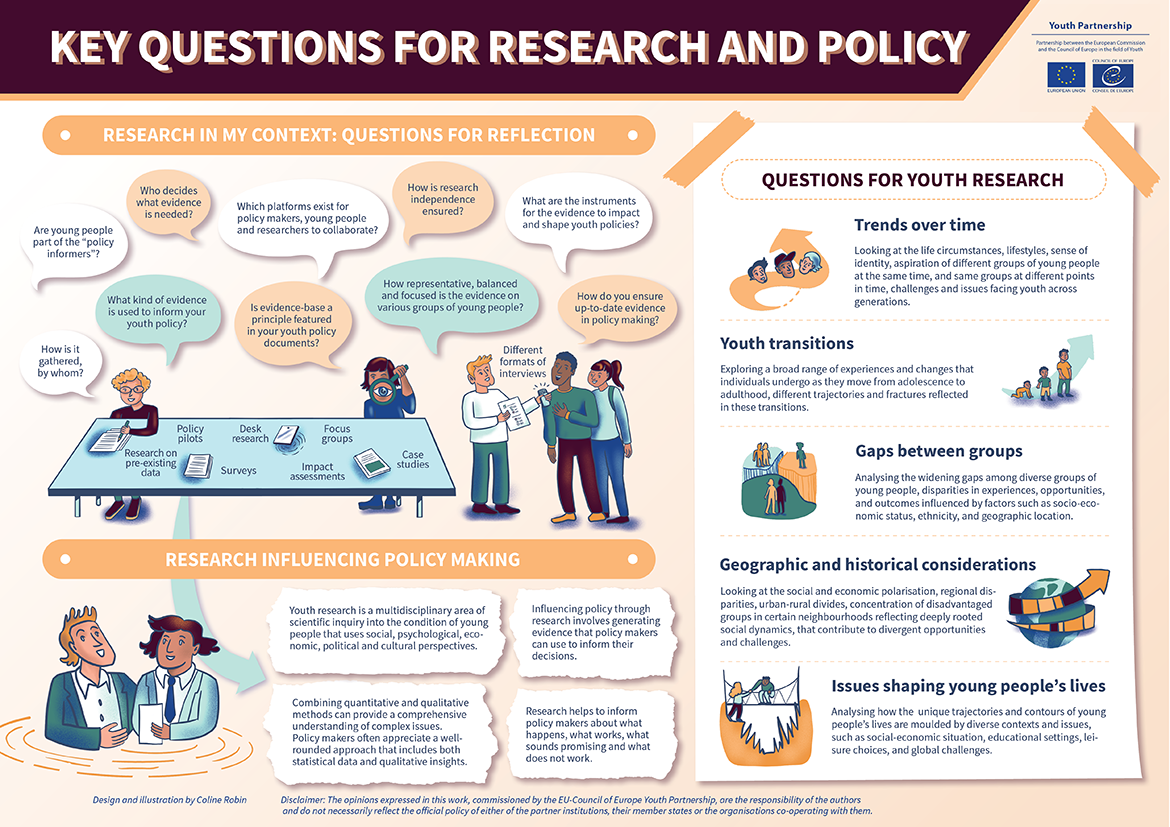
Evidence-based youth policies are youth policies that are not only based on political and moral objectives, but also on accurate information on the social situation of young people across the society and their changing expectations, attitudes and life-styles. One important source of information is independent, objective and professional research and statistics. Furthermore, reliable empirical information on the implementation of policies is needed to learn from experiences and further develop goal setting, the policy approaches and youth work methods and activities.
REF: Siurala, Lasse (2005): European framework of youth policy |
| Formal learning |
Formal learning is purposive learning that takes place in a distinct and institutionalised environment specifically designed for teaching/training and learning, which is staffed by learning facilitators who are specifically qualified for the sector, level and subject concerned and which usually serves a specified category of learners (defined by age, level and specialism). Learning aims are almost always externally set, learning progress is usually monitored and assessed, and learning outcomes are usually recognised by certificates or diplomas. Much formal learning provision is compulsory (school education).
REF: Chisholm, L. (2005) Bridges for Recognition Cheat Sheet: Proceedings of the SALTO Bridges for Recognition: Promoting Recognition of Youth Work across Europe, Leuven-Louvain |
Formative evaluation or assessment
|
Formative evaluation or assessment refers to a dynamic process over time, which tries to capture the developmental dimensions of learning, performance and achievement. It records the pathways and the changes between two points in time, with the primary accent on what lies between those points and how the journey has unfolded.
REF: Chisholm, L. (2005) Bridges for Recognition Cheat Sheet: Proceedings of the SALTO Bridges for Recognition: Promoting Recognition of Youth Work across Europe, Leuven-Louvain |
|
Human Rights Education
|
Human Rights Education refers to educational programmes and activities that focus on promoting equality in human dignity, in conjunction with other programmes such as those promoting intercultural learning, participation and empowerment of minorities"
Human rights education includes:
- Promoting awareness and understanding of human rights issues, in order that people recognise violations of human rights (learning about human rights)
- Developing the skills and abilities necessary for the defence of human rights (learning for human rights)
- Developing attitudes of respect for human rights, so that people do not willingly violate the rights of others (learning through human rights)
Knowledge, skills and attitudes
1. Knowledge : learning about human rights
Key concepts such as: freedom, justice, equality, human dignity, non-discrimination, democracy, universality, rights, responsibilities, interdependence and solidarity.
- The idea that human rights provide a framework for negotiating and agreeing standards of behaviour in the family, in school, in the community, and in the wider world;
- The role of human rights and their past and future dimension in one's own life, in the life of communities, and in the lives of other people around the world.
- The distinction between civil/political and social/economic rights;
- Different ways of viewing and experiencing human rights in different societies, different groups within the same society, and the various sources of legitimacy - including religious, moral and legal sources;
- Main social changes, historical events and reasons leading to the recognition of human rights;
- Major international instruments that exist to implement the protection of human rights - such as the United Nations Declarations of Human Rights (UDHR), the United Nations Convention of the Rights of the Child (UNCRC), the European Convention on the Protection of Human Rights and Fundamental Freedoms (ECHR);
- Local, national, international bodies, non-governmental organisations, individuals working to support and protect human rights.
2. Skills : learning for human rights
- Active listening and communication: being able to listen to different points of view, to advocate one's own rights and those of other people;
- Critical thinking: finding relevant information, appraising evidence critically, being aware of preconceptions and biases, recognising forms of manipulation, and making decisions on the basis of reasoned judgement;
- The ability to work co-operatively and to address conflict positively;
- The ability to participate in and organise social groups;
- Acting to promote and safeguard human rights both locally and globally.
3. Attitudes and values : learning through human rights
- A sense of responsibility for one's own actions, a commitment to personal development and social change;
- Curiosity, an open mind and an appreciation of diversity;
- Empathy and solidarity with others and a commitment to support those whose human rights are under threat;
- A sense of human dignity, of self-worth and of others' worth, irrespective of social, cultural, linguistic or religious differences;
- A sense of justice, the desire to work towards the ideals of freedom, equality and respect for diversity.
REF: COMPASS, the manual on human rights education : www.coe.int/compass
|
| Identity |
The (feeling of) identity of a group or culture, or of an individual as far as she/he is influenced by her/his belonging to a group or culture. Common habits, characteristics, ideas may be clear markers of a shared cultural identity, but essentially it is determined by difference: we feel we belong to a group, and a group defines itself as a group, by noticing and highlighting differences with other groups and cultures. Identity (or ‘self’) is very much a social constuction: for example feminist studies argue that gender identities must be understood in relation to the (often male) expectations of women, girls, mothers and wifes. It is further argued that today’s (late modern) identities are often fragmented, overlapping and continuously under construction. This makes the task of educational actors, like youth work, whose objective it is to support young peoples’ identity growth, increasingly challenging.
REF: Siurala, Lasse (2005): European framework of youth policy |
| Informal learning |
Informal learning from the learner’s standpoint at least, this is non-purposive learning which takes place in everyday life contexts in the family, at work, during leisure and in the community. It does have outcomes, but these are seldom recorded, virtually never certified and are typically neither immediately visible for the learner nor do they count in themselves for education, training or employment purposes. APEL systems are one way in which the outcomes of such learning can be made more visible and hence open to greater recognition.
REF: Chisholm, L. (2005) Bridges for Recognition Cheat Sheet: Proceedings of the SALTO Bridges for Recognition: Promoting Recognition of Youth Work across Europe, Leuven-Louvain |
|
Integration
|
Integration reconciles difference/s in the sense of a synthesis that creates a coherent entirety – ‘wholeness’. Well-achieved, integration is pleasing in that it constructs a genuine harmony – an equilibrium – between disparate elements. In everyday use, the term nowadays frequently connotes the social integration of foreigners or of persons living with disabilities on equal terms with the mainstream or majority. Currently, European socio-political discourses on integration are focusing above all on linguistic and religious issues arising from immigration from third countries, especially (but by no means only) from world regions beyond Europe.
But what is the reference point for integration? How is it possible to ensure that everyone can make an equally valued contribution to the integrative synthesis? Will or should the synthesis be a ‘melting pot’ or a ‘mixed salad’? Typically, those who do not ‘fit’ the mainstream or the majority have to assimilate, at least in part. This means they have to take on (some of) the values and practices of the mainstream or majority in order to be socially accepted. Depending on the circumstances, integration could become another word for assimilation. But integration is necessarily (at least) a two-way process, so minorities and majorities (whose composition shifts according to what is in the foreground) have to negotiate multiple reconciliations in order to create together a mutually pleasing synthesis. It would be difficult to argue that European societies are currently doing really well on this count, although most of them are making some sort of progress and some can reasonably claim to be well-established multi-ethnic and cosmopolitan polities.
®Minorities
|
| Intercultural learning |
The process of becoming more aware of and better understanding one's own culture and other cultures around the world. The aim of intercultural learning is to increase international and cross-cultural tolerance and understanding. The learning process itself is constant movement of cultural awareness – from the freedom and comfort of expecting others to be like oneself, to the shock and constraint of one’s emotions and projections when they prove not to be. The Council of Europe Youth Sector is a pioneer in developing intercultural learning as a pedagogical tool (see Intercultural Learning,T-kits, also the European Federation of Intercultural Learning.
REF: Siurala, Lasse (2005): European framework of youth policy |
| Juventization |
Juventization is a pro-active, problem-solving approach to youth participation perceiving it as the active involvement of young people in the social transformation of their societies.
REF: Kovacheva (2000), cited in: Council of Europe and European Commission Research Partnership Research Seminar- ‘What About Youth Political Participation?’ 24-26 November 2003, European Youth Centre, Strasbourg. Final Report on the proceeding and recommendations for implementation of European Objectives on participation |
| Knowledge |
It is impossible to provide a satisfactory account of the conceptual background behind the term knowledge in a few words. In the everyday world, the meaning of the term knowledge appears self-evident: it is what someone individually knows or the sum of what a given civilisation collectively knows. But what does it mean to know something? What is it that is known, how do we come to know it, why does it count as something worth knowing, and what do we do with it when we know it? In educational practice knowledge is what there is to learn, but it is not necessarily useful and worthwhile of its own accord. It has to be joined up with skills and competences (to become useful) on the one hand – and no less importantly, with principles and values (to become worthwhile) on the other hand.
REF: Chisholm, L. (2005) Bridges for Recognition Cheat Sheet: Proceedings of the SALTO Bridges for Recognition: Promoting Recognition of Youth Work across Europe, Leuven-Louvain |
| Learning outcomes |
Learning outcomes are the results of a learning process, which may be expressed in a variety of ways. In fact, the outcomes that are recorded and measured at any one point in time are interim moments in a learning process, that is, a snapshot frame in a film (which could also run backwards).
REF: Chisholm, L. (2005) Bridges for Recognition Cheat Sheet: Proceedings of the SALTO Bridges for Recognition: Promoting Recognition of Youth Work across Europe, Leuven-Louvain |
| Learning providers |
Learning providers are organisations or a set of institutionalised arrangements that deliver learning, that is, that manage and monitor the provision of courses of some kind, whether formal or non-formal. Learning providers may also design and/or execute the courses they offer, and they may operate in either the public or the private sector. They may or may not be subject to some form of state or professional regulation to assure quality and standards.
REF: Chisholm, L. (2005) Bridges for Recognition Cheat Sheet: Proceedings of the SALTO Bridges for Recognition: Promoting Recognition of Youth Work across Europe, Leuven-Louvain |
| Mentoring |
Mentoring is a structured process for providing personal guidance and support to someone who is younger, less experienced or new to the game – whatever the context may be, but most commonly in education, training and employment contexts. Mentors act as critical but non-judgemental friends, provide a role model and a source of useful information and advice, and can take on a coaching task (helping to improve performance). They may be freely chosen, but may also be allocated using a set of matching criteria. Formal mentoring programmes are likely to specify a given time-period for the mentoring relationship.
REF: Chisholm, L. (2005) Bridges for Recognition Cheat Sheet: Proceedings of the SALTO Bridges for Recognition: Promoting Recognition of Youth Work across Europe, Leuven-Louvain |
|
Methodologies
|
In education and training, methodology is commonly understood to be the educational logic and philosophical rationale underlying a particular pedagogical approach. It can be used as a reference framework that enables an evaluation of whether a specific method is appropriate for given learning aims, contents and contexts. This means that methodologies are coherent sets of principles and relations that frame specific methods and their use. They ‘make sense’ of individual methods, and in so doing they provide a meta-orientation for planning training/teaching and learning processes.
Research methodologies fulfil an analogous purpose for the collection and analysis of information and data. They bring methods together that ‘fit’ with particular ways of approaching how to understand and explain the social world. Typically, social researchers will define themselves as oriented to ‘qualitative’ or ‘quantitative’ methodologies. Basically, this distinction refers to the extent to which one thinks it is possible to make sense of the world ‘as it is’ (regardless of how we may interpret things) as opposed to the extent to which our interpretations intervene (and without which we would not be able to understand anything very much). These differences of approach have resulted in much debate and controversy amongst social scientists, but in practice, most researchers do not adopt fundamentalist positions – they accept both major methodologies and use methods associated with each, depending on the research problem at hand. |
|
Methods
|
In education and training, a method is a planned and (in principle) replicable activity providing a didactic framework for achieving specific learning aims in a defined time frame. In non-formal and informal learning contexts, the replication principle applies, in the main, to the capacity to reproduce the framing conditions for learning processes. Precisely how these processes take place, individually and collectively, is intentionally not subject to pre-specification (so that genuinely active and self-directed learning can take place). Learning aims are usually specified, but a range of individual and collective learning outcomes are possible and legitimate.In addition to its immediate purpose, a method also visualises and exemplifies the pedagogical philosophy, rationale and approach of an educational facilitator (trainer, teacher, …) or of an educational team working together. In non-formal education, methods usually seek congruence between values, contents and pedagogies.
In research, a method is a concrete technique for collecting or analysing information and data in a systematic way – and so ideally producing reliable and valid results. The technique may be designed for dealing with quantitative material (essentially, numbers or abstract symbols), such as questionnaires (data collection) or statistical significance tests (data analysis). Or it may be designed for dealing with qualitative material (for example in words, pictures or observational accounts), such as narrative interviews (data collection) or analytic induction (data analysis). Many kinds of information can be collected and analysed both quantitatively and qualitatively, so that different methods can be used to research the same phenomenon – but they might not all be equally useful or appropriate for doing so. Individual research methods are usually ultimately related to differing philosophical approaches to understanding and explaining the social world.
® Methodologies
|
|
Minorities
|
A minority group is defined on the basis of being different from a majority group. This may include minorities based on ascribed statuses such as race, ethnicity, gender, sexual orientation, and disability. It may also include groups with deeply held shared identities and practices, including religious or linguistic groups.
For all types of minority groups, it is typically true that the group is different in some way that is regarded as socially significant from those who hold the dominant influence in society, and on the basis of that difference the group is assigned to a subordinate or disadvantaged status.
Early approaches to minorities began from the assumption that such social groups are always smaller in number than those belonging to the mainstream or majority in a given society. By the 1970s, feminist analysis had shown that girls and women, though outnumbering boys and men in most societies of the world, share many of the social features of minority groups – not least in terms of prejudice and discrimination. Most, if not all, contemporary societies are androcentric, that is, values, beliefs, practices and institutional arrangements are predicated on the circumstances of men’s lives and on the tenets of masculinity as a set of social and cultural ideologies and practices. This in turn structures social power relations between women and men, generally to the disadvantage of the former, and tends to make such inequalities appear ‘ natural’. These insights revolutionised theoretical perspectives on majority-minority relations, so that today, the term ‘minority group’ refers to a complex set of features that together signify distinctiveness in relation to that which is perceived as ‘typical’ or ‘standard’ in a given historical time and social space.
On the whole, members of minority groups are prone to experience disadvantage of various kinds, but the attributes and life circumstances of some minorities instead lead to personal and social privilege – and in this case, such social groups are called ‘elites’.
|
| National agencies |
National agencies are structures established by the national authorities in each YOUTH Programme country in order to assist the European Commission with management and to assume responsibility for implementation of most of the YOUTH Programme.
REF: European Commission, Education and Culture, Youth Programme (2004): Users Guide |
| National youth councils |
An umbrella organization for youth NGOs and sometimes also other actors in youth work. National youth councils function primarily as a service organization to their members, but can also be a lobby and advocacy body. A similar role in international level is played by European Youth Forum, where National youth councils play a strong role (see www.Youthforum.org).
REF: Siurala, Lasse (2005): European framework of youth policy |
| Non-formal learning |
Non-formal learning is purposive but voluntary learning that takes place in a diverse range of environments and situations for which teaching/training and learning is not necessarily their sole or main activity. These environments and situations may be intermittent or transitory, and the activities or courses that take place may be staffed by professional learning facilitators (such as youth trainers) or by volunteers (such as youth leaders). The activities and courses are planned, but are seldom structured by conventional rhythms or curriculum subjects. They usually address specific target groups, but rarely document or assess learning outcomes or achievements in conventionally visible ways.
REF: Chisholm, L. (2005) Bridges for Recognition Cheat Sheet: Proceedings of the SALTO Bridges for Recognition: Promoting Recognition of Youth Work across Europe, Leuven-Louvain |
| Open and distance learning (ODL) |
Open and distance learning (ODL) combines two distinct categories of learning provision and participation which frequently occur together. Open learning is purposive learning that takes place where, when and how the learner chooses. It may also be self-directed learning, that is, the learner also voluntarily chooses what and why to learn. Open learning may be formal or non-formal in character. Distance learning covers the spectrum from correspondence learning (‘by post’) to eLearning (IT supported learning, whether as content, pedagogy or medium). It may or may not be designed as open learning, and can include highly formalised and closely assessed types of learning processes and outcomes.
REF: Chisholm, L. (2005) Bridges for Recognition Cheat Sheet: Proceedings of the SALTO Bridges for Recognition: Promoting Recognition of Youth Work across Europe, Leuven-Louvain |
| Open Method of Coordination (OMC) |
In many policy areas, EU Member States set their own national policies rather than having an EU-wide policy laid down in law. The OMC provides a framework for co-operation between the Member States, whose national policies can thus be directed towards certain common objectives. Under this method, the Member States are evaluated by one another, with the European Commission's role limited to coordination and surveillance.
The OMC in the youth field.
The OMC is used to establish common objectives for the 4 priorities of the White Paper on Youth: “participation”, information”, “voluntary activities” and “a greater understanding and knowledge of youth”. Then the European Commission coordinates and monitors the implementation of the objectives in the Member States through the method. Consulting young people is part of the process.
Rolling Agenda.
After agreeing on common objectives in a Council Resolution, the Member states report back to the Commission on what they have done to implement them. Based on an analysis of the Member States' reports, the Commission makes proposals on how to advance the priorities further in a Communication to the Council. This leads to another Council Resolution, in which a follow up is proposed and new elements can be introduced. In the EU jargon this cycle is called the "rolling agenda".
More information about the Open Method of Coordination is available on the Youth portal of European Commission
|
| Participation |
Participation is not an aim in itself, but an approach to becoming active citizen participation as a means of 'taking an active role both in the development of one's own environment and in European co-operation' “(CDEJ 1997:7). Such an approach was accepted in the design of the study of youth experiments in European Union member states (Boukobza 1998). The operational definition used in this study accepts Golubovic's (1982) ample interpretation: "power based on the possibility of exerting influence on the economic and social aspects of life in the broad community".
REF: Council of Europe and European Commission Research Partnership Research Seminar- ‘What About Youth Political Participation?’ 24-26 November 2003, European Youth Centre, Strasbourg. Final Report on the proceeding and recommendations for implementation of European Objectives on participation |
| Qualification |
Qualification can also simply be a synonym for a certificate or diploma. In the world of formal education and training in Europe it is usually an official record or document testifying to the fact that a person has successfully completed a given course or reached a given standard of achievement for a specified field, skill or competence.
REF: Chisholm, L. (2005) Bridges for Recognition Cheat Sheet: Proceedings of the SALTO Bridges for Recognition: Promoting Recognition of Youth Work across Europe, Leuven-Louvain |
| Skill |
Skill means having the knowledge and experience needed to perform a specific task or job – someone who has learned what to do (possesses the knowledge) and how to do it (can transfer the knowledge into real practice), which also means that someone else can observe the skill in action.
REF: Chisholm, L. (2005) Bridges for Recognition Cheat Sheet: Proceedings of the SALTO Bridges for Recognition: Promoting Recognition of Youth Work across Europe, Leuven-Louvain |
| Social capital |
Social capital consists of civil society norms and networks that enable citizens and their institutions to perform more productively. Without adequate supplies of social capital – that is, civic engagement, healthy community institutions, norms of mutual reciprocity, and trust –d emocracies and market economies may begin to falter.
REF:(Pharr and Putnam 2000:26) quoted in: Council of Europe and European Commission Research Partnership Research Seminar- ‘What About Youth Political Participation?’ 24-26 November 2003, European Youth Centre, Strasbourg. Final Report on the proceeding and recommendations for implementation of European Objectives on participation |
| Social recognition |
Social recognition points to the status and esteem (‘feel good factor’) that individuals, organisations or sectors receive as a consequence of displaying certain characteristics, reaching certain achievements or engaging in certain activities – such as learning. It might also extend to material rewards, such as higher incomes for those with higher level qualifications.
REF: Chisholm, L. (2005) Bridges for Recognition Cheat Sheet: Proceedings of the SALTO Bridges for Recognition: Promoting Recognition of Youth Work across Europe, Leuven-Louvain |
| Standards and quality standards |
Standards and quality standards are terms that can be used in several different ways. To say that an organisation uses standard methods of youth work might simply mean that it uses what the commentator judges to be the usual methods, that is, those used most commonly. The comment might well also convey the judgement that the methods in question are those generally recognised in the youth sector to be appropriate. This carries the suggestion that standard methods reflect professional norms, that is, they are seen to be good and valuable methods. At this point the term standards takes on a distinctive flavour, because it introduces the idea that some youth work methods are better than others (depending, of course, to some extent on the purpose and the participants). This raises the question of the bases for such quality judgements, which take the form of criteria, that is, attributes that should be present (or not present in some instances) if a particular youth work activity and its methods are to be seen as of good quality. The criteria that are applied are not necessarily the same for all cases, although some criteria may apply in all cases.
REF: Chisholm, L. (2005) Bridges for Recognition Cheat Sheet: Proceedings of the SALTO Bridges for Recognition: Promoting Recognition of Youth Work across Europe, Leuven-Louvain |
| Summative evaluation or assessment |
Summative evaluation or assessment refers to assembling a picture of the outcomes of an activity in relation to the aims and purposes with which it began and/or in relation to a set of performance criteria that apply to all comparable activities. This kind of evaluation or assessment places the primary accent on comparing the starting and ending points of a process, but is less concerned with what happened along the way.
REF: Chisholm, L. (2005) Bridges for Recognition Cheat Sheet: Proceedings of the SALTO Bridges for Recognition: Promoting Recognition of Youth Work across Europe, Leuven-Louvain |
| Teacher |
Teacher is the word traditionally used to refer to those who shape, guide and accompany learning processes in schools, colleges and – to some extent – higher education. They may teach vocational subjects, but it is not common to use the word ‘teacher’ for those who work in company-based contexts.
REF: Chisholm, L. (2005) Bridges for Recognition Cheat Sheet: Proceedings of the SALTO Bridges for Recognition: Promoting Recognition of Youth Work across Europe, Leuven-Louvain |
| Validation |
The overall aim of validation is to make visible and value the full range of qualifications and competences held by an individual, irrespective of where these have been acquired. The purpose of this validation may be formative (supporting an ongoing learning process) as well as summative (aiming at certification).
REF: European Commission, Directorate-General for Education and Culture (2004): Common European Principles for Validation of Non-formal and Informal Learning |
| Values of youth sector |
Values of youth sector refer to European Convention on Human Rights, rule of law, free elections and pluralism, gender equality, social justice, minority protection, children and youth rights, access and inclusion.
REF: Council of Europe and European Commission Research Partnership Research Seminar- ‘The Youth Sector and Non-formal Education/Learning: working to make lifelong learning a reality and contributing to the Third Sector’, Strasbourg 28-30 of April 2004, Report |
| Voluntary activities |
Voluntary activities are understood as comprising all kinds of voluntary engagement. They are characterised by the following aspects: open to all, unpaid, undertaken of own free will, educational (non-formal learning aspect), added social value.
REF:European Commission: Communication from the Commission to the Council, COM (2004) 337 - 30.4.2004 [Pdf] Proposed common objectives for voluntary activities among young people in response to the Council Resolution of 27 June 2002 regarding the framework of European cooperation in the youth field. |
| Voluntary service |
Voluntary service is understood as being part of voluntary activities and is characterised by the following additional aspects: fixed period (no matter if short or long-term), clear objectives, contents and tasks, structure and framework, appropriate support, legal and social protection.
REF: European Commission: Communication from the Commission to the Council, COM (2004) 337 - 30.4.2004: Proposed common objectives for voluntary activities among young people in response to the Council Resolution of 27 June 2002 regarding the framework of European cooperation in the youth field. [Pdf] |
| White paper |
Generally speaking, "white papers" are policy documents containing background information and proposals for action in a specific political area.
The name and concept of White Papers originated in parliamentary practice particularly in England in the first half of the 20th century, where this type of document was bound in white instead of the customary blue paper cover.
The Council of Europe has published in the past very few White Papers, whereas the European Commission is frequently using this method for advancing certain policy approaches. At national level, many parliaments and governments regularly publish White Papers. |
| Young people |
Young people are persons 13 – 30 years old (for the purposes of European youth policies this age is used both by the European Commission and Council of Europe).
REF: Council of Europe and European Commission Research Partnership Research Seminar- ‘The Youth Sector and Non-formal Education/Learning: working to make lifelong learning a reality and contributing to the Third Sector’, Strasbourg 28-30 of April 2004, Report |
| Young people with fewer opportunities |
Young people with fewer opportunities are young people from a less-privileged cultural, geographical or socio-economic background, or with disabilities.
REF: European Commission, Education and Culture, Youth Programme (2004): Users Guide |
|
Youth parliaments
|
Youth parliaments are meetings of young people taking on the roles of Members of Parliament. Such model parliaments are usually organised with the political ambition to increase young people's political participation and the educational ambition to raise awareness and increase understanding of political processes.
Furthermore, the role of youth parliaments is often described as encouragement of independent thinking and stimulation of socio-political initiative.
|
| Youth policy |
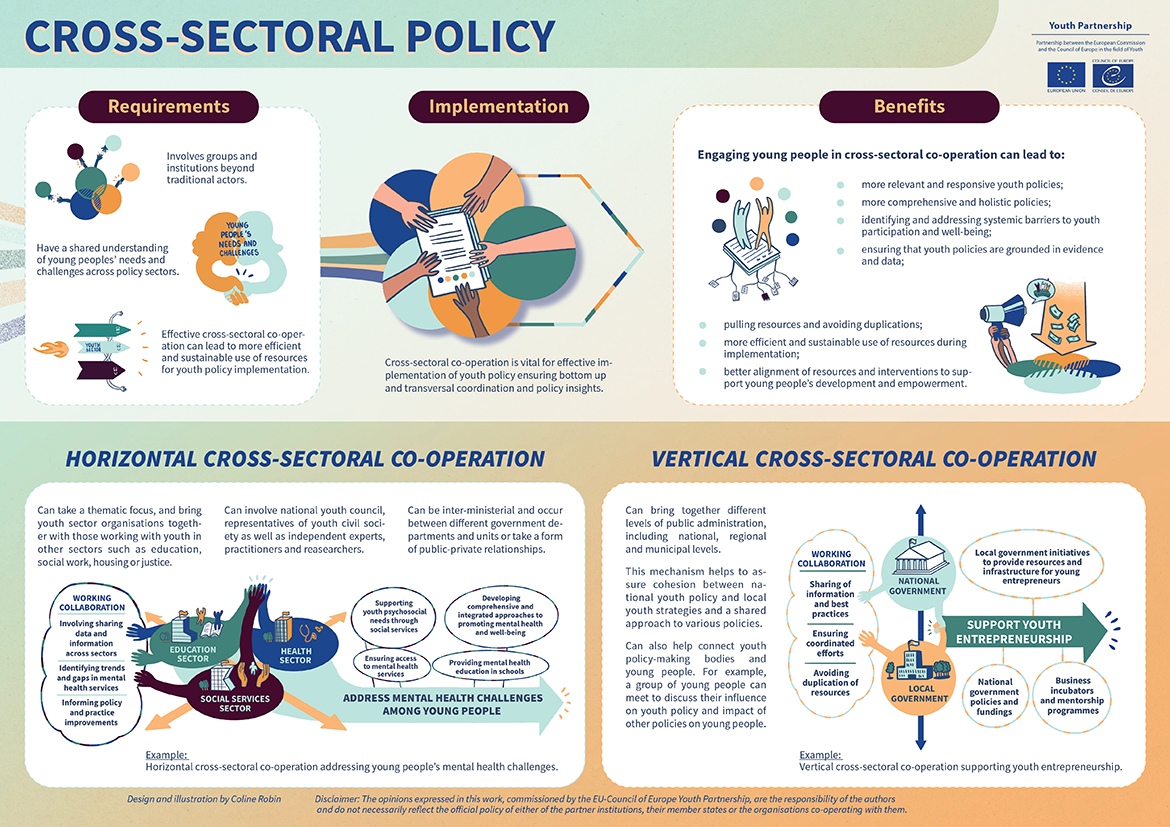
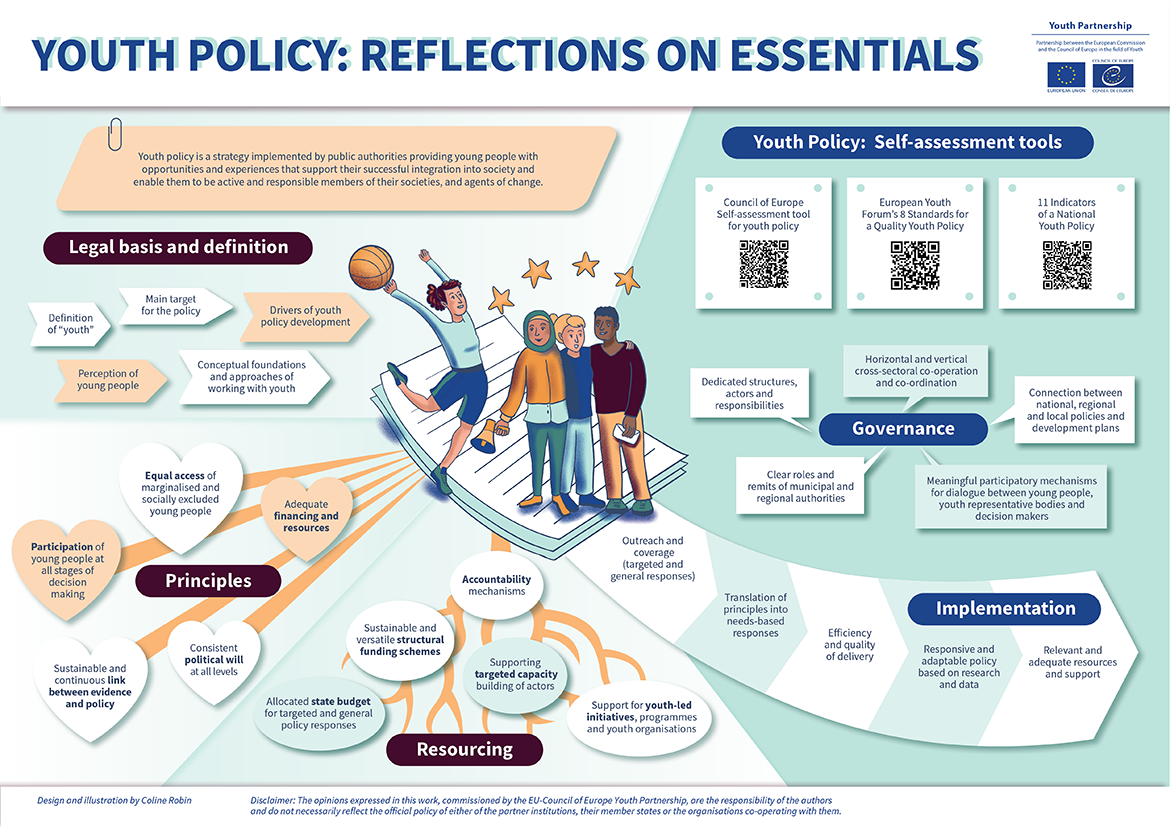
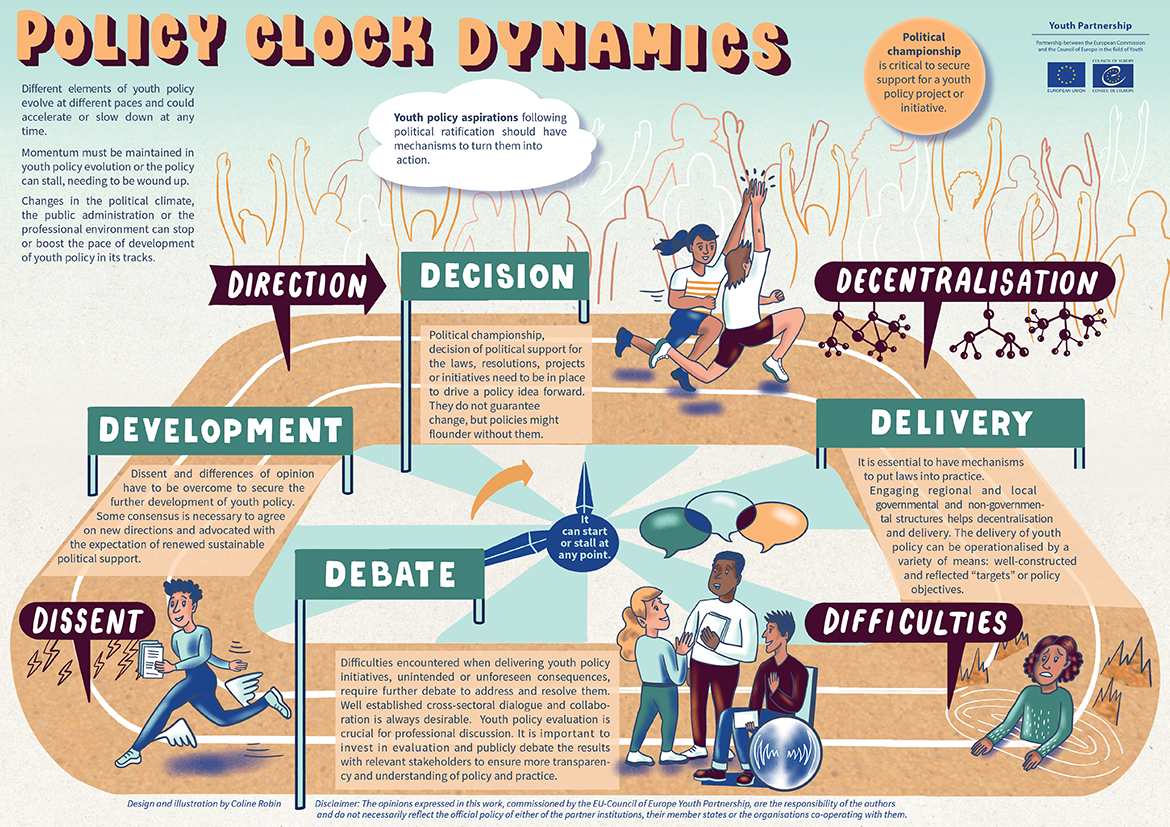
The purpose of youth policy is to create conditions for learning, opportunity and experience which ensure and enable young people to develop the knowledge, skills and competences to be actors of democracy and to integrate into society, in particular playing active part in both civil society and the labour market. The key measures of youth policies are to promote citizenship learning and the integrated policy approach.
REF: Siurala, Lasse (2005): European framework of youth policy |
| Youth political participation |
Groups of young people, who meet on a regular basis, with the aim of raising awareness, or challenging policies and/or practices, at a local, national or international level. Eden and Roker (2002) Modern participation ‘ representative participation and direct participation with all their variants, such as NGO based structures, co management, youth parliaments, school councils, youth hearings, demonstrations (Siurala 2000). Post modern or emergent and future forms of participation various types of expressive, emotional, aesthetic, casual virtual and digital participation.
REF:(Siurala 2000) referenced in Council of Europe and European Commission Research Partnership Research Seminar- ‘What About Youth Political Participation?’ 24-26 November 2003, European Youth Centre, Strasbourg. Final Report on the proceeding and recommendations for implementation of European Objectives on participation |
|
Youth research
|
Youth research is a specialist area of social scientific inquiry that focuses on the life-phase ‘ youth’ in all its respects – including what counts as ‘youth’ in the first place. It has always been closely concerned with individual development, life-course analysis, cultural expression and social change – and so it is a multidisciplinary and multidimensional field of research rooted in numerous theoretical traditions, epistemological perspectives and methodological approaches. This also means that youth research is frequently viewed with incomprehension by those who are committed to a purely discipline-led scholarship. Life-course perspectives demand greater ‘lifewide’ integration and imply decidedly constructivist approaches to understanding youth as a cultural and social phenomenon.
In practice, youth research parallels other fields of social inquiry: it seeks to secure plausible truths through rigorous inquiry into accessible realities of young people, through methodical questioning of different accounts, and through systematic confrontation between different standpoints on those realities and accounts and their interpretation.
European youth research became a distinct specialist field in the early 1990s, defining itself as an intercultural and transnational coalition committed to supporting an organic (‘magic’) triangle between research, policy and practice. Both the Council of Europe and the European Commission have supported the development of this scientific community, not least through the Youth Partnership.
Adapted from Chisholm, Lynne (2006): Youth research and the youth sector in Europe: perspectives, partnerships and promise. In Milmeister & Williamson (Eds): Dialogues and networks. Esch: Éditions Phi.
|
| Youth trainers |
Youth trainers are people who train others to work with young people, using non-formal methods, focusing on personal and social development and with an emphasis on fostering intercultural competence.
REF: Chisholm, L. (2005) Bridges for Recognition Cheat Sheet: Proceedings of the SALTO Bridges for Recognition: Promoting Recognition of Youth Work across Europe, Leuven-Louvain |
|
Youth welfare services
|
Youth welfare services are provisions designed [1] to guarantee and protect the basic and fundamental rights of young people, and (2) to assure the care and protection of young people deemed to be personally or socially at risk. By extension, youth welfare policies give special priority to bridge social and economic divisions by supporting young people from disadvantaged backgrounds to overcome the obstacles they face. In most countries, approaches of youth welfare services are meant to support and complement – not replace or (unless the rights of young people are violated) contradict – the educational and socialising function of the family and formal schooling.
All European countries have laws at national and/or federal level regulating the provision of welfare services, often providing an outline framework that local and regional authorities turn into specific measures. Child and youth welfare may be dealt with together or through distinct provisions and agencies. Today, the public sector is the mainstream service provider, but measures may be implemented by a mixture of governmental structures, quasi-governmental organisations and non-governmental associations. On the whole, services are staffed by formally qualified and salaried staff, but voluntary workers continue to make their contribution in NGO contexts.
Approaches of youth welfare services may be informing, supporting, advising, assisting, educating – but also protecting, controlling, intervening, limiting, excluding, and even patronising. Methods commonly cut across a large variety of fields, including but not limited to youth work, social work, social pedagogy, guidance, counselling, monitoring, and psychology.
[1] Vaknin, Sam: The definition of definitions http://samvak.tripod.com/define.html
|
| Youth work |
The main objective of youth work is to provide opportunities for young people to shape their own futures. Youth work is a summary expression for activities with and for young people of a social, cultural, educational or political nature. Increasingly, youth work activities also include sports and services for young people. Youth work belongs to the domain of 'out-of-school’ education, most commonly referred to as either non-formal or informal learning. The general aims of youth work are the integration and inclusion of young people in society. It may also aim towards the personal and social emancipation of young people from dependency and exploitation. Youth Work belongs both to the social welfare and to the educational systems. In some countries it is regulated by law and administered by state civil servants, in particular at local level. However, there exists an important relation between these professional and voluntary workers which is at times antagonistic, and at others, cooperative. The definition of youth work is diverse. While it is recognised, promoted and financed by public authorities in many European countries, it has only a marginal status in others where it remains of an entirely voluntary nature. What is considered in one country to be the work of traditional 'youth workers' – be it professionals or volunteers - may be carried out by consultants in another, or by neighbourhoods and families in yet another country or, indeed, not at all in many places. Today, the difficulty within state systems to adequately ensure global access to education and the labour market, means that youth work increasingly deals with unemployment, educational failure, marginalisation and social exclusion. Increasingly, youth work overlaps with the area of social services previously undertaken by the Welfare State. It, therefore, includes work on aspects such as education, employment, assistance and guidance, housing, mobility, criminal justice and health, as well as the more traditional areas of participation, youth politics, cultural activities, scouting, leisure and sports. Youth work often seeks to reach out to particular groups of young people such as disadvantaged youth in socially deprived neighbourhoods, or immigrant youth including refugees and asylum seekers. Youth work may at times be organised around a particular religious tradition.
REF: Lauritzen P. (2006): Internal working paper, Council of Europe, Strasbourg |
| Youth workers |
Youth workers are people who work with young people in a wide variety of non-formal and informal contexts, typically focusing on personal and social development through one-to-one relationships and in group-based activities. Being learning facilitators may be their main task, but it is at least as likely that youth workers take a social pedagogic or directly social work based approach. In many cases, these roles and functions are combined with each other.
REF: Chisholm, L. (2005) Bridges for Recognition Cheat Sheet: Proceedings of the SALTO Bridges for Recognition: Promoting Recognition of Youth Work across Europe, Leuven-Louvain |
|
|